
‘Not Just Small Adults’: Children’s and Emory Researchers Build Specialized AI Models to Guide Clinical Decision Making for Clinicians Treating Kids
Dr. Satish Viswanath and Team Harness AI for Good, Developing Models to Unlock More Effective Treatments and Precision Medicine
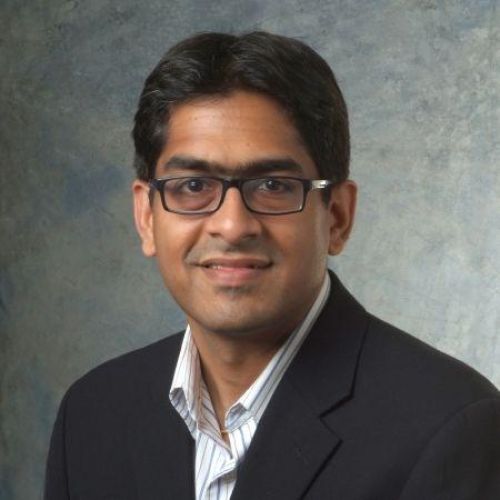
There is no shortage of headlines about AI—many sensational, some scary—but researchers at Children’s and Emory know it can be used for good. Satish Viswanath, PhD, and other researchers in his lab are committed to building AI models that help children and the clinicians who serve them.
More specifically, they are focused on developing novel AI machine learning algorithms and computational imaging models to guide clinical decision making, helping clinicians make decisions about patient care and provide highly personalized, precision medicine.
“This offers a way to accurately identify patients at risk of suffering or experiencing complications,” he said. “We hope to more proactively identify these patients so we can better help them.”
Dr. Viswanath and his team anticipate it could also help people better understand the benefits of a particular treatment and boost confidence in outcomes. Recommendations are very personalized, based on a patient’s specific data.
Unlocking Superpowers
Paired with expert clinicians, AI could help unlock information about which treatments could be most effective by predicting outcomes based on a patient’s unique characteristics—precise, individualized medicine. But Dr. Viswanath is clear that AI is not a stand-in for clinical judgment and experience. He has been exploring this for a while, first at Case Western and more recently at Children’s and Emory.
“We have found when we compare clinicians to AI head-to-head, in properly designed studies with tasks with clinical implications, that humans and machines perform comparably with these highly technical tasks,” he said. “But, when we put clinicians and AI together, we see a massive improvement in identifying patients at risk of the most complications.”
According to Dr. Viswanath, “augmenting expertise with AI could give clinicians a superpower.” He emphasizes that this is not just what he believes; it is what the data shows us. “When we work with people and AI, we can augment the performance of humans to new levels,” he said. “There will always be things that humans can do that a machine cannot.”
Kids Are Not Small Adults: Designing for Kids, Informed by Experts
As an engineer, Dr. Viswanath understands the potential power of AI in medicine. For years, his lab has worked to create solutions for pediatric and adult conditions. But more recently, as he is raising his own children, he has noticed a void in the pediatric domain.
“Technology was being built in the adult space, but not as much in pediatrics,” he said. “The impact and potential of creating AI models to guide clinical decision making for pediatricians could be massive. AI could be a key to unlocking better, more effective treatments for one of our most vulnerable populations—kids.”
One of the reasons we’ve seen less development in the pediatrics space is that for most endeavors, it’s hard to study children.
“Kids are not tiny adults, and we can’t just take the adult model and apply it to them expecting it to work,” said Dr. Viswanath. “They have specific characteristics, and we must build specialized models for them to guide treatment.”
An experience sitting with a pediatric gastroenterologist brought this idea home to Dr. Viswanath. They were building a program to figure out which children would benefit from a specific treatment plan, but the model kept making mistakes. The program guidance was that many of these patients would benefit from surgery, but the mistake was that surgery wasn’t an option for these patients due to their size. The program was using information about adult treatment options to make recommendations for children.
The need to build specialized models for children is gaining increased recognition. Dr. Viswanath and his team recently received a $1 million grant from the National Cancer Institute to develop specialized AI models in pediatric brain tumors. The U.S. Department of Health and Human Services (HHS) also recently announced focused funding dedicated to AI and data-driven efforts in pediatric cancer research.
In addition, The Leona M. and Harry B. Helmsley Charitable Trust recently awarded $2.7 million to the STAR Consortium (a collaboration among Cleveland Clinic, Emory University, Mayo Clinic and University of Calgary) for Crohn’s stricture AI development—a project Dr. Viswanath will co-lead with Florian Rieder, MD, from the Cleveland Clinic to create an image-based biomarker to drive effective therapies for Crohn’s disease patients with fibrosis.
“Children are very unique patients,” he said. “Models need to be built for children, in partnership with pediatric specialists.”
Children’s and Emory—Leading the Way in Innovation
Technology moves fast, and Dr. Viswanath believes we are at a pivotal moment in the development of AI.
“We’ve all watched movies and read books that predispose us to be pessimistic about new technologies, but it is important to remember that these are tools,” he said. “With AI, we are seeing the integration of new technologies and tools into our lives from the ground up. We can inform and guide what AI is learning. It is an iterative, human-driven and, importantly, human-inspired process.”
For clinicians, AI offers an opportunity to guide clinical decision making. For patients and their families, AI offers the opportunity to help them better understand treatment options.
“It’s become clear that a lot of AI models have been built by engineers for engineers,” Dr. Viswanath said. “They need to be built for clinicians and for patients, and that’s what we’re going to be working on at Children’s and Emory.”
One of the reasons Dr. Viswanath brought his lab to Emory is the investment they have made in AI in recent years, including the Emory Empathetic AI for Health Institute (AI Health).
“That, paired with the clinical ecosystems at Children’s and Emory, offers a unique opportunity to be a leader in using AI to guide clinical decision making,” he said. “I am excited to be part of building out a whole new dedicated effort at Children’s, and in seeing the broad impact this can have in different clinical areas. This is an area where we can lead, especially across the entirety of the pediatric domain.”
Originally published here.