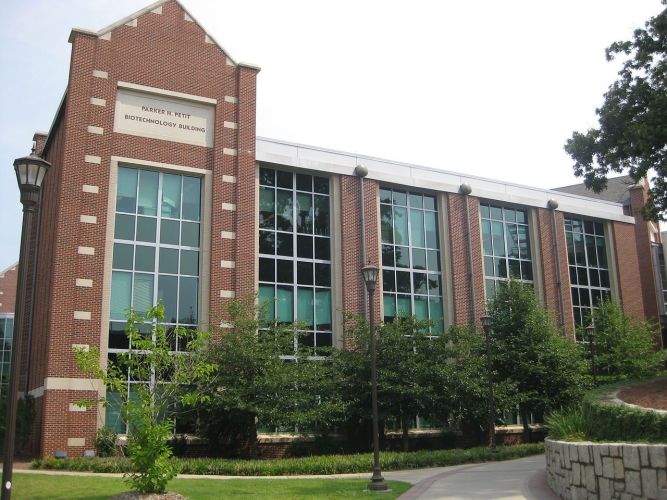
Petit Institute Core Facilities
Acknowledgments
The Petit Institute's core facilities are here to support your research. Please include the following acknowledgement on all publications. "We wish to acknowledge the core facilities at the Parker H. Petit Institute for Bioengineering and Bioscience at the Georgia Institute of Technology for the use of their shared equipment, services and expertise."
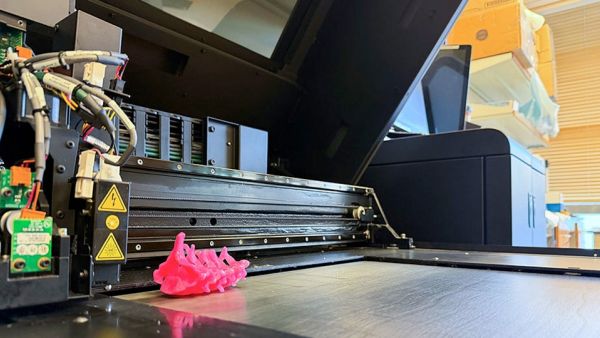
The 3D Printing Core offers advanced PolyJet 3D printers, combined with AI-assisted medical image segmentation, fabricate realistic anatomical models enhanced by a proprietary algorithm that mimics tissue mechanics. With applications in New Alternative Methods (NAMs) for medical device testing, surgical planning, patient education, and medical training, our team provides expert support to researchers, clinicians, and industry partners.
Learn More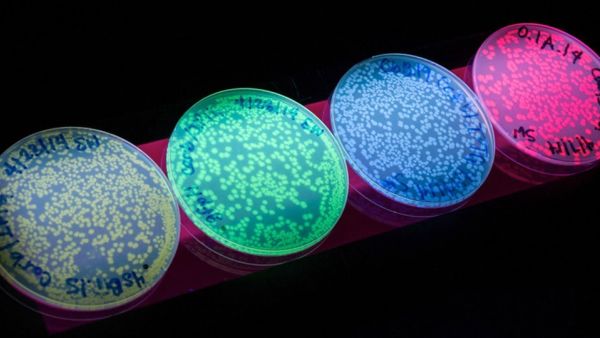
The Advanced Bioinformatics Core uses sophisticated computational and statistical methods to analyze complex biological data, such as large-scale genomic, transcriptomic and proteomic datasets, to gain deeper insights into diseases, drug discovery and fundamental biological processes.
Learn More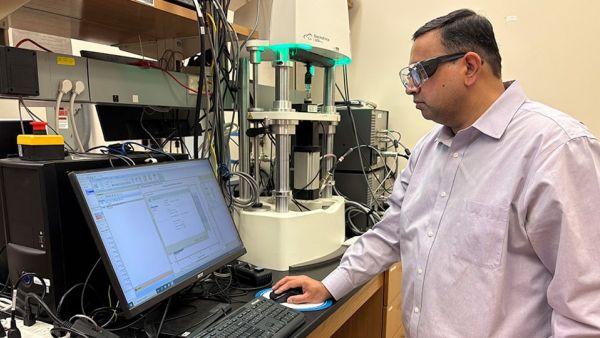
The Biomechanics core facility conducts mechanical analysis and testing of biological and engineered materials. Static and dynamic mechanical characterization is performed in this facility through various modes of testing (compressive, tensile, torsional, flexural, fatigue, etc).
Learn More
Biomolecules form the basis of life. Biomolecular Analysis involves the characterization of polymeric biomolecules such as DNA, RNA, protein, carbohydrates and lipids as well as single biomolecules.
Learn More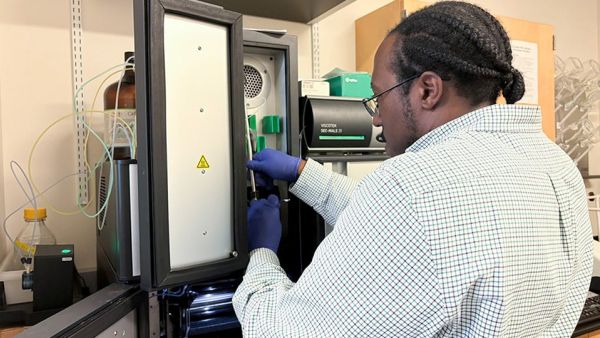
Biopolymers including proteins and enzymes play a crucial role in the development of innovative biotechnology. The Biopolymer Characterization (BPC) core facility serves as an ideal, well-equipped facility for all protein and enzyme characterization needs. The core features a wide range of state-of-the-art instruments for conducting structural, functional, kinetic, and high-throughput analysis of samples.
Learn More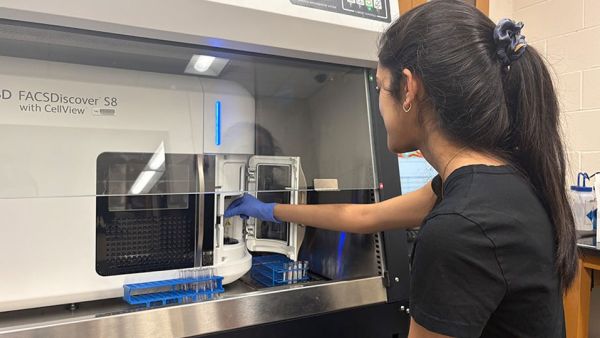
The cell is the basic unit of the organism. Cellular Analysis involves the characterization of cell populations using fluid based transport systems. In the Coulter Multisizer, impedance is used to size and count cells as well as particles as they pass the through the orifice of an aperture.
Learn More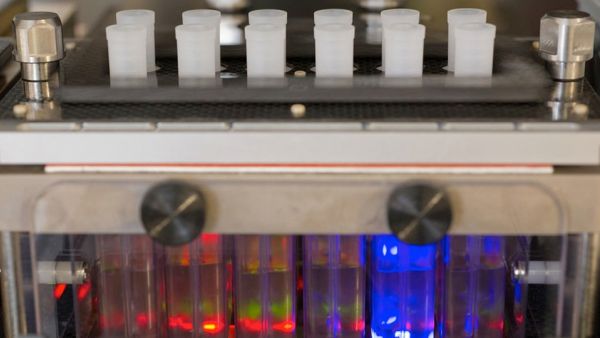
The BioMark Genetic Analysis Platform is a fully integrated system enabling analysis of gene expression, genotyping, mutant detection, and absolute quantization of nucleic-acid sequences utilizing Dynamic Array Integrated Fluidic Chip (IFC) technology which provides high-throughput real-time qPCR.
Learn More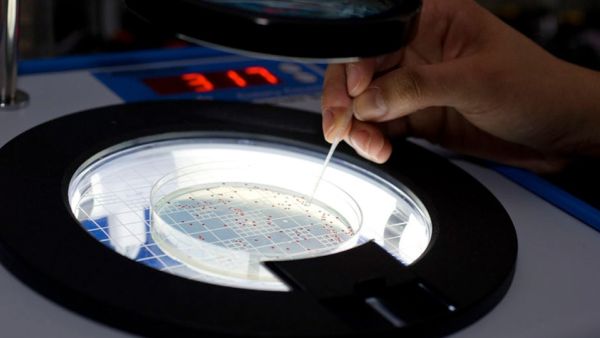
The sequencing core at Georgia Tech houses an Illumina HiSeq 2500, a state-of-the-art machine capable of ultra-high-throughput sequencing that can be used in various facets of biological sciences. The core provides its services to all Georgia Tech labs, academic collaborators and research groups from industrial settings.
Learn More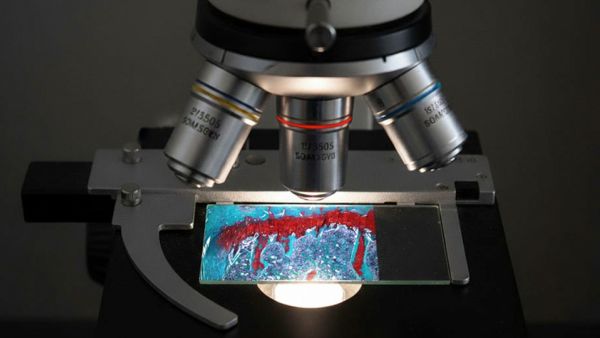
Histology allows the visualization, identification and the qualitative and quantitative analysis of cellular and tissue morphology. One of its primary mission is to serve as a training platform for students. Students are trained by a certified histologist to perform their own work.
Learn More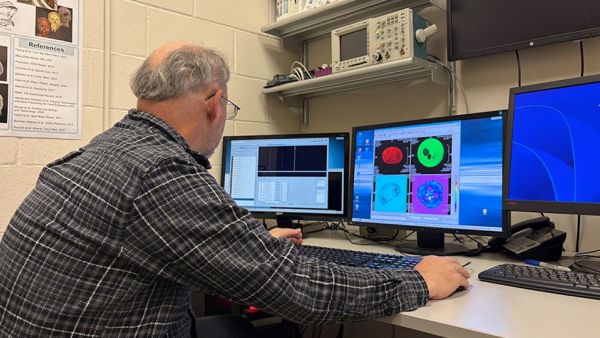
NMRI-MR is a core facility for high resolution. MRI studies with the following focus: Molecular imaging, cardiac imaging, development of new contrast agents and biomedical engineering.
Learn More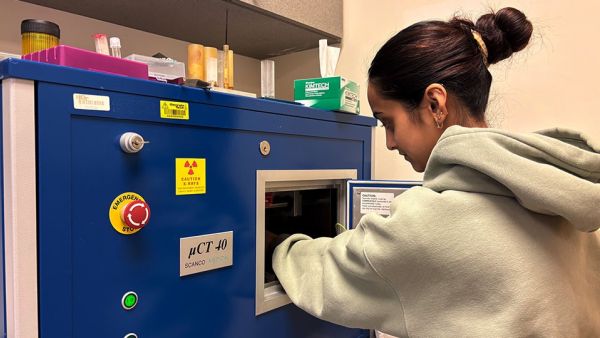
Micro-computed tomography (micro-CT) is an X-ray imaging technique used for high resolution, nondestructive assessment of materials including musculoskeletal tissues and engineered biomaterials.
Learn More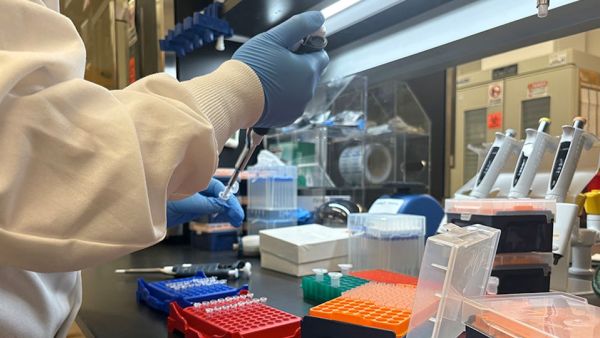
The Molecular Evolution Core provides expertise in large-scale library construction and characterization for evolutionary experiments. The Core also supports custom cloning and display platforms (phage, yeast, bacterial), plus in-house oligonucleotide and peptide synthesis. A CLIA certified lab within Molecular Evolution designs and runs high-complexity tests for the Georgia Tech community.
Learn More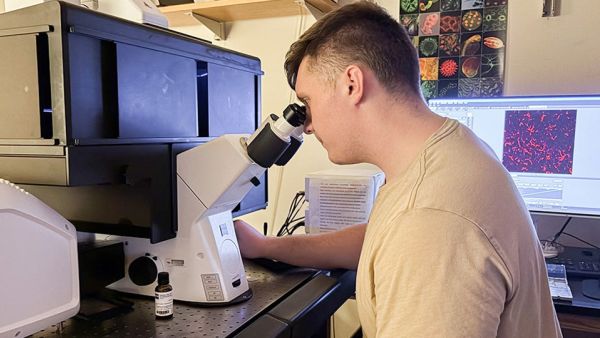
The Optical Microcopy core provides state-of-the-art microscopy systems as well as training and assistance to the research community at Georgia Tech and the surrounding area. Confocal, 2-Photon, Lightsheet, live-cell, super-resolution, TIRF, FCS, FRAP, FRET and many other techniques are available in the core.
Learn More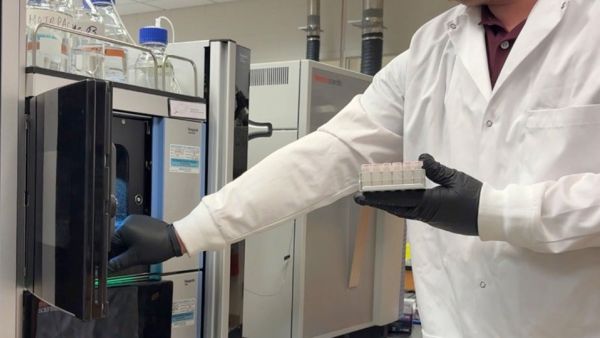
The mission of SyMS-M (Systems Mass Spectrometry - Metabolomics) Core is to provide state-of-the-art analytical measurements that support modern metabolomics as well as molecular analysis. Our team of expert scientists is committed to innovation and collaborative partnerships to advance molecular insights in a variety of research projects.
Learn More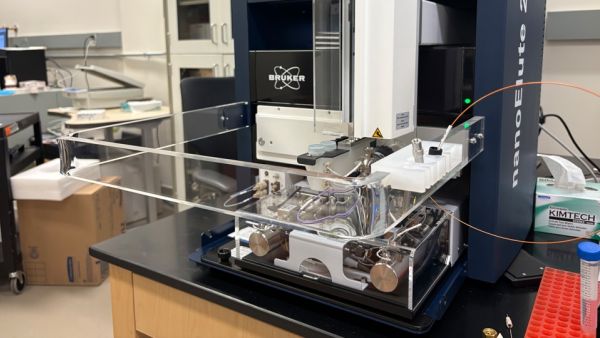
SyMS-P (Systems Mass Spectrometry - Proteomics) Core is dedicated to accelerating transformative research by providing cutting-edge proteomics capabilities. Powered by state-of-the-art LC-MS systems and a team of expert scientists, SyMS-P delivers comprehensive solutions, from experimental design to data analysis. Through scientific excellence, innovation and collaborative partnerships, SyMS-P empowers researchers to unravel proteome complexities, advancing breakthroughs in biology, medicine and biotechnology.
Learn More